
Electric vehicle aerodynamics as a secret weapon for efficient driving

With the rapid development of transportation technology, many are focused on the battery capacity of electric vehicles (EVs). However, there is one aspect that is often overlooked but is critical to extending driving range: aerodynamics. This is considered the “secret weapon” of engineers to make modern vehicles more efficient [1].
Aerodynamics is the study of how air flows around an object while it is in motion. In the world of EVs, reducing air resistance directly results in a longer driving range without the need to add heavier batteries [3].
The role of the drag coefficient in efficiency
The primary metric used to determine a vehicle’s aerodynamic efficiency is the coefficient of drag or Cd. The lower this number, the more easily the vehicle “slices” through the air. Traditional gasoline-powered vehicles typically have a Cd of 0.30 to 0.40 [1].
On the other hand, modern EVs are designed to reach a Cd of 0.20 to 0.24. Reducing the drag coefficient by even just 10% can increase driving range by up to 7% on expressways [1]. This is a significant help, especially for drivers who frequently travel long distances.
Why aerodynamics is important on the expressway
Many assume that vehicle weight is the biggest enemy of energy. At low speeds within the city, this is true due to the rolling resistance of the tires. But once the vehicle reaches speeds of 80 km/h or higher, air becomes the primary obstacle [1].
On Philippine expressways like NLEX or SLEX, approximately 50% to 60% of battery energy is spent simply fighting drag. Because of this, advancements in vehicle technology are focused on creating smoother vehicle body shapes to save electricity.
Innovations in EV design
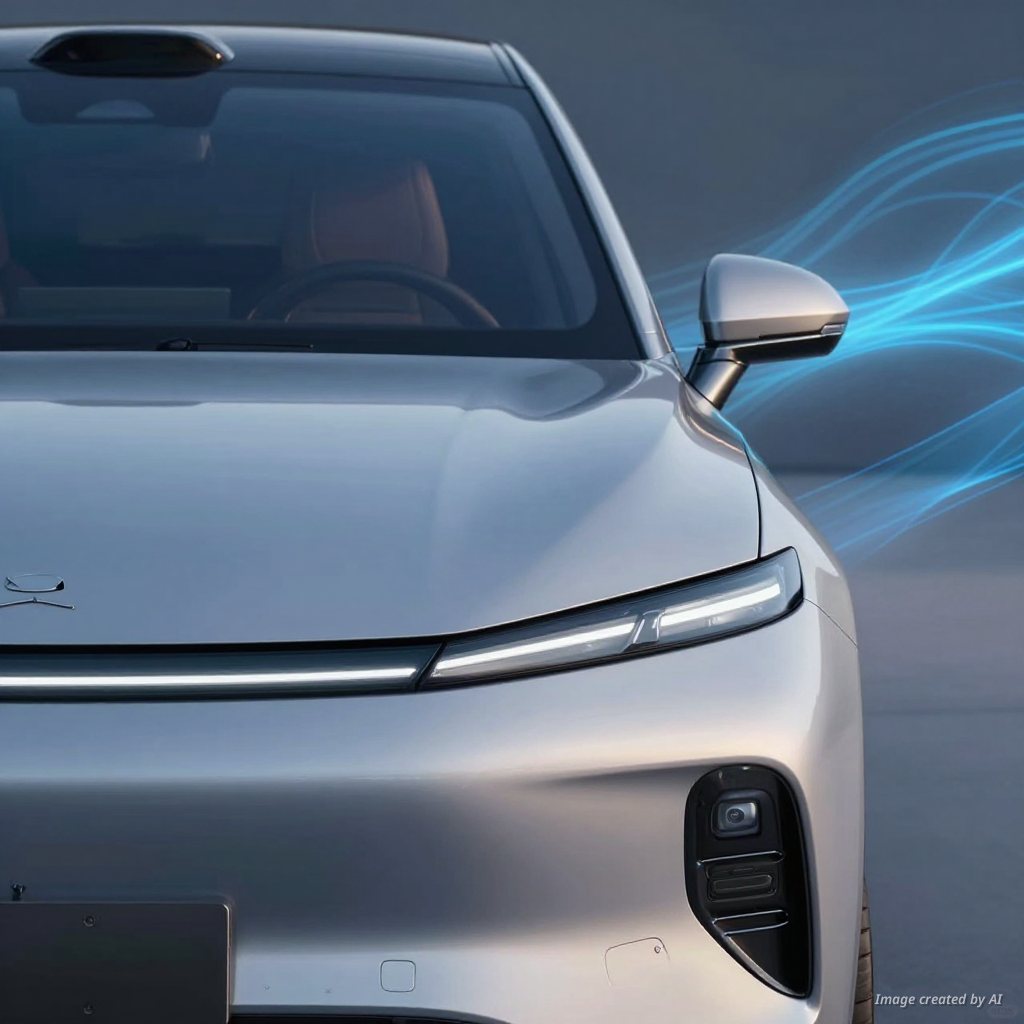
To achieve this level of efficiency, manufacturers use various technical solutions. One of the most effective is the use of a flush or sealed front grille. Since there is no radiator that requires strong airflow like in a combustion engine, it is better to close the front of the vehicle [1].
Flattening the bottom of the vehicle or a “flat underbody” is also a crucial part of the design. The battery pack located at the bottom serves as the base for this flat surface, which prevents air turbulence under the vehicle. You can read about the importance of smart software in managing electric vehicle charging in the Philippines for more information on optimizing your EV.
Active air shutter technology
The front of the vehicle does not need to be closed all the time. Active air shutters are automatic vents that open only when the powertrain or battery needs cooling. When driving at high speeds, they close to maintain the vehicle’s aerodynamic profile [1].
Furthermore, the use of flush door handles and aero wheels also helps significantly. Aero wheel covers reduce air vortex within the wheel wells, which adds 1% to 3% to the vehicle’s total range. These small details, when combined, have a major impact on the overall performance of the vehicle.
Context in the Philippines and the EOPT Act
Under Republic Act No. 11697, or the Electric Vehicle Industry Development Act, the government encourages the use of more efficient vehicles [2]. Understanding aerodynamics is not just for engineers; it is also important for consumers in the Philippines who want to save on electricity costs.
Because the Philippines has some of the highest electricity rates in the region, every kilowatt-hour saved through efficient aerodynamics directly reduces expenses. You can check the role of AI in route optimization and avoiding traffic congestion in the Philippines to further increase your efficiency on the road.
Climate and thermal management
The hot climate in the Philippines requires intensive use of the air conditioning system. Efficient aerodynamics helps reduce the load on the battery. When the vehicle moves more smoothly, less energy is required for its operation, providing more reserve power for cooling the cabin and battery thermal management [3].
The Board of Investments of the Philippines continues to support initiatives that disseminate knowledge about these modern technologies. Choosing a vehicle with high aerodynamic efficiency is a smart decision for any Filipino planning to transition to electric mobility [2].
Conclusion
Aerodynamics is more than just a beautiful vehicle design. It is a scientific approach to maximizing every bit of energy from the battery. When choosing your next EV, remember that the shape of the vehicle is just as important as the size of its battery.
By understanding these concepts, Filipinos will be better prepared to embrace the future of transportation. Being knowledgeable about aerodynamics is your key to a longer, more economical, and more enjoyable journey on the road [1].
More Information
- Coefficient of drag (Cd): A dimensionless number that measures an object’s resistance to a fluid, such as air. A lower number means the vehicle is more streamlined and more efficient at speed.
- Electric Vehicle Industry Development Act (RA 11697): A law in the Philippines that sets policies for the development of the electric vehicle industry and provides incentives for its users.
- Driving range: The total distance an electric vehicle can travel on a full battery charge before it needs to be recharged again at a charging station.
- Active air shutters: Automatic components at the front of the vehicle that open or close to control airflow, which reduces drag and improves battery cooling.
- Rolling resistance: The force resisting the rolling of a tire on the road surface, which is one of the primary factors that consumes energy at low driving speeds.